2025
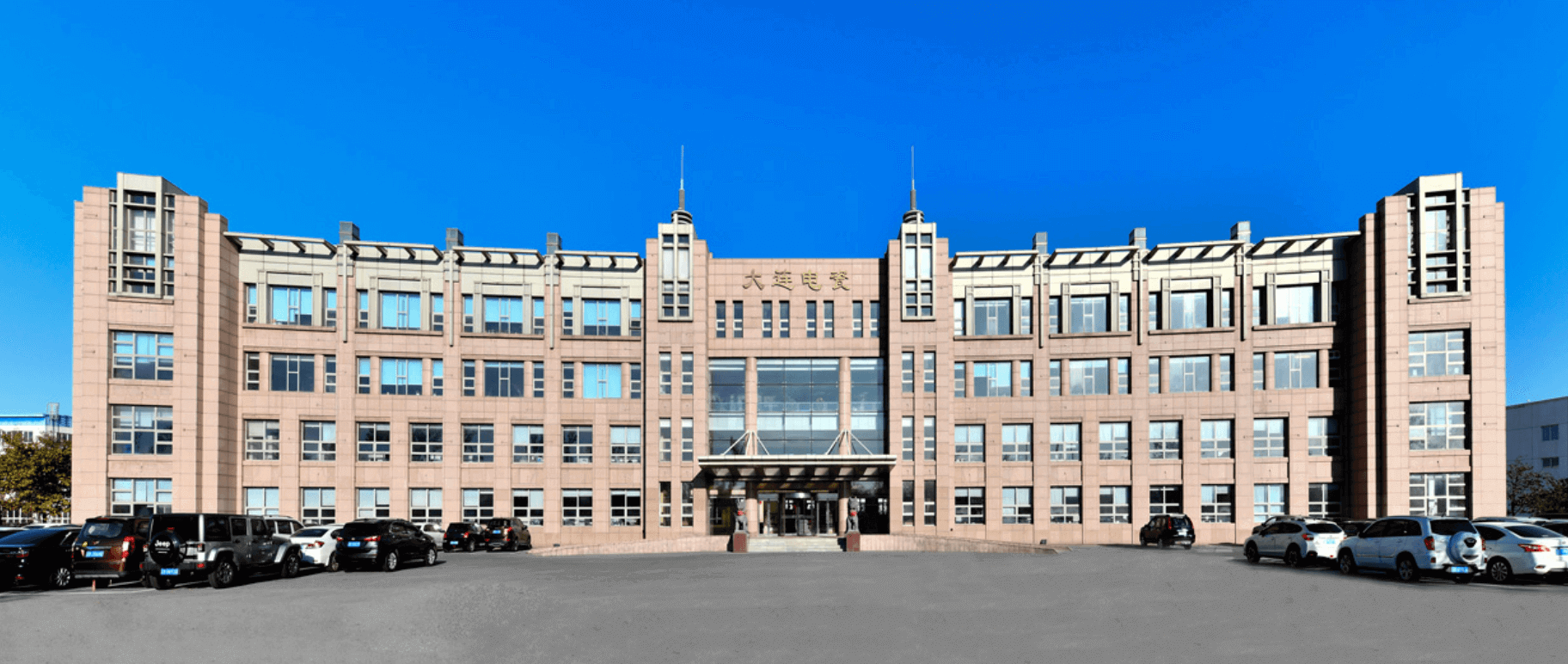
Dalian Electric Porcelain Group celebrates its 110th anniversary and establishes the Dalian Electric Porcelain Museum;
2023
On December 9, 2023, the company's hybrid porcelain insulator passed the new product technical appraisal.
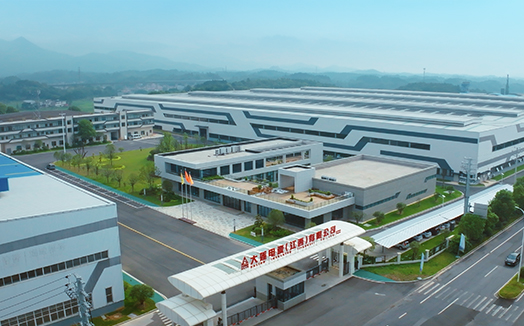
On May 18, Dalian Insulator (Jiangxi) Co., Ltd., a subsidiary of the company, was put into production.
2021
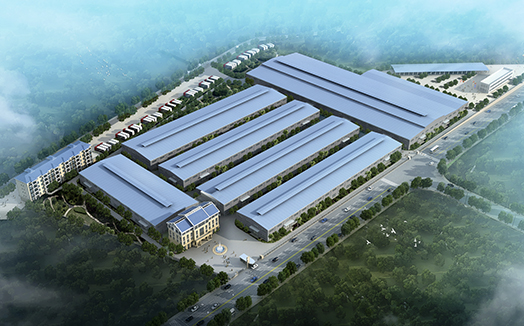
Dalian Insulator (Jiangxi) Co., Ltd., a subsidiary of the company, was established in July 2021. Located in Luxi County Industrial Park, Pingxiang City, Jiangxi Province, it covers an area of 249 mu (approximately 166,000 square meters) with a total investment of 410 million yuan. Construction began in 2020 and production started in 2023, with the capacity to produce 70kN-550kN cap-and-pin suspension porcelain insulators.
2020
In 2020, the company was awarded the title of "Liaoning Province Gazelle Enterprise".
The company invested in the construction of a new factory in Jiangxi.
2019
In 2019, the alumina formula was first applied to export products. After passing the appraisal by State Grid experts, the Yazhong-Jiangxi Transmission Line became the first domestic project to use domestic alumina formula cylindrical head products.
2017
In 2017, the company was selected into the list of China's first batch of 60 Demonstration Enterprises of Manufacturing Single Champions.
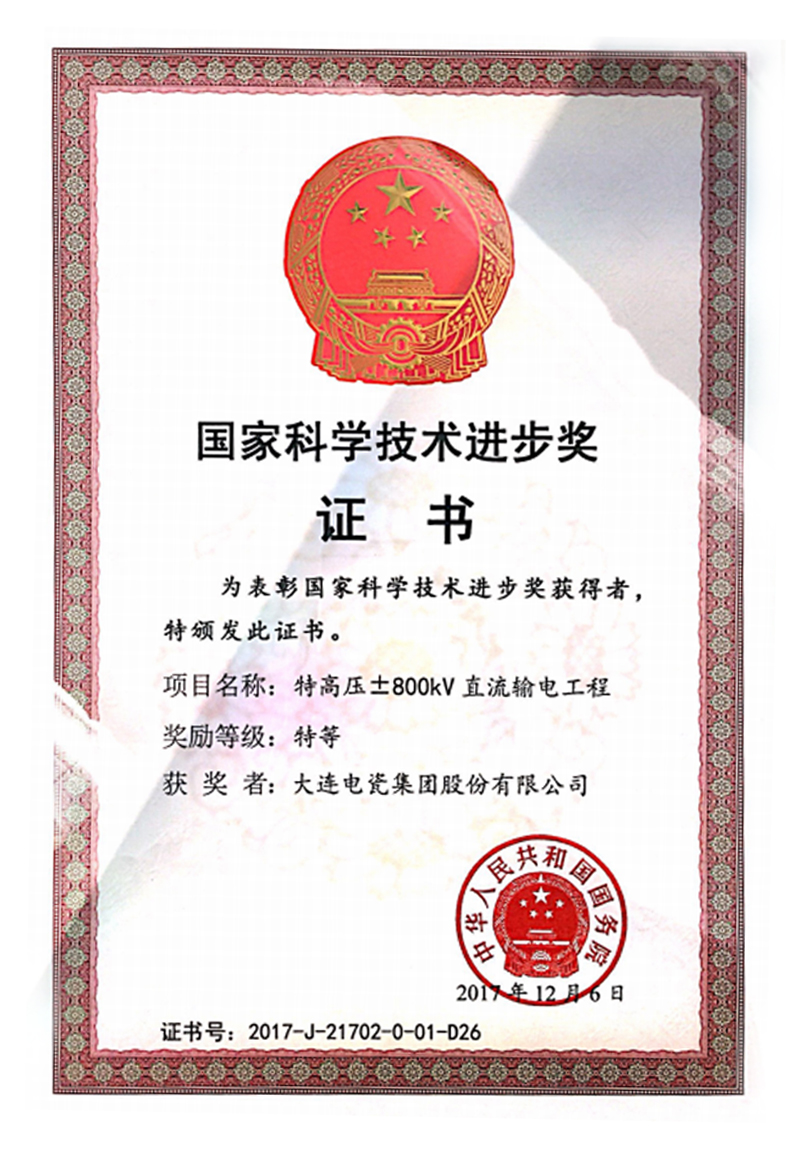
The company successfully completed the supply of porcelain insulators for the world's first ±1.1 million volt DC transmission project - the "Changji-Guquan" UHV DC transmission line project.
2016
In April 2016, the company was awarded the title of "Most Influential Brand in China's Electrical Industry".
In July, the "Key Technologies and Engineering Application for Prevention and Control of Large-Scale Power Grid Pollution Flashover Accidents" project, in which the company participated, won the First-Class China Electric Power Science and Technology Progress Award for 2015.
In July, the company obtained the Production Enterprise License for Railway Transportation Infrastructure Equipment.
In October, the company's rod-type suspension composite insulators (160km/h and above), rod-type suspension composite insulators (200km/h and above), rod-type post composite insulators (160km/h and above), and cap-and-pin suspension porcelain insulators obtained certification certificates from the China Railway Test & Certification Center.
In December, the company was recognized for Dalian Enterprise Innovation Records in standard formulation and revision (4 projects), famous brand products, technological innovation projects (5 projects), and as a leading enterprise. The national standard GB/T 1000-2016 "Dimensions and Characteristics of Pin-Type Porcelain Insulators for High-Voltage Lines", which the company participated in formulating, was released.
2015
In August 2015, the company passed the ISO50001:2011 energy management system certification.
In October, the company's "San Jian (Three Arrows)" Brand AC/DC cap-and-pin suspension porcelain insulators for high-voltage power transmission and transformation lines were awarded the title of Liaoning Provincial Key Famous Brand Product.
On December 6, 32 models across 5 product series developed by the company passed technical appraisal organized by the China Machinery Industry Federation, including "700kN, 840 (760)kN series AC suspension porcelain insulators", "700kN, 840 (760)kN series DC suspension porcelain insulators", "1000kV series AC overhead line composite insulators", "±1100kV series DC rod-type suspension composite insulators", and "±800kV series DC rod-type suspension composite insulators".
2011
The company conducted its initial public offering (IPO) of A-shares (Stock Code: 002606) and was listed for trading on the Shenzhen Stock Exchange SME Board.
2008
In 2006, in accordance with the requirements of "1000kV UHV AC Power Transmission and Transformation Complete Equipment", the company developed the XP-550 product to meet the needs of UHV project construction. Meanwhile, to address the single shed structure of 420kN-class products, the company accelerated the development of aerodynamic structure products to meet the requirements of 1000kV AC UHV transmission line projects. As part of its 2006 R&D plan, the company focused on developing XP-550, XWP-420, and XSP2-420 products. In 2007 and 2008, it developed products with larger creepage distances, including XSP3-420, XWP1-420, XWP1-550, and XSP1-550, providing more options for the construction of China's 1000kV AC UHV transmission line projects.
In 2008, the company supplied insulators for China's first UHV AC transmission project - "Jindongnan-Nanyang-Jingmen".
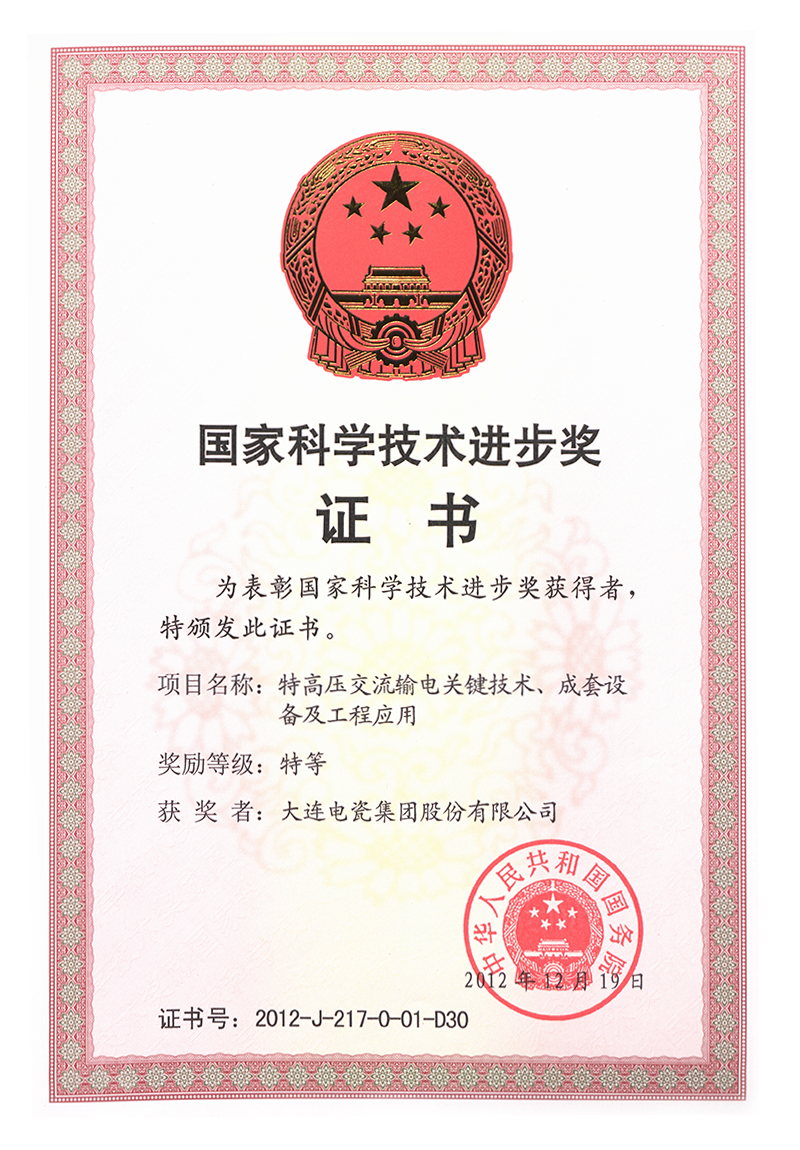
Relying on the project "Key Technologies, Complete Equipment and Engineering Application of UHV AC Transmission", the company won the Special-Class National Award for Progress in Science and Technology in 2012.
It also won the Special-Class China Machinery Industry Science and Technology Award in 2009 for "Research on Key Technologies, Equipment Development and Engineering Application of 1000kV AC Power Transmission and Transformation".
2007
In 2004, the company began developing power station insulators.
2004
In 2002, the company launched an overall relocation and transformation project to build a new factory in the ShuangD Port Digital Manufacturing Park, covering an area of 168,877 square meters with a total investment of 240 million yuan. A total of 828 sets of production equipment were purchased and installed during the transformation. The entire relocation and transformation project took two years and was fully completed in October 2004.
2003
To meet the needs of DC projects, Dalian Insulator Co., Ltd. began developing 400kN DC insulators in 2002 based on the successful development of 400kN AC insulators. The product passed technical appraisal organized by two ministries (China Machinery Industry Federation and State Power Corporation) in October 2003. It was first used in bulk in the Sanhu Line (Three Gorges Caijiachong-Shanghai Baihe ±500kV DC Transmission Line Project of the Three Gorges Project) in 2005, with a supply volume of 75,430 pieces. In 2006, it supplied 52,988 pieces for the Guizhou-Guangdong II Circuit ±500kV DC Transmission Project of China Southern Power Grid. This achieved the localization of high-grade, large-tonnage insulators.
2002
The groundbreaking ceremony for the new factory site in Dalian ShuangD Port was held in June.
1999
In 1999, in accordance with the Science and Technology Development Plan of the State Administration of Machinery Industry (new product trial production section), Plan No.: 99160019, Dalian Insulator Factory designed and developed the 160kN double-shed DC insulator (XZWP1-160) to meet the development needs of China's EHV ±500kV DC transmission. In 2004, to improve the product series, based on domestic operational experience and actual needs, the company successively developed aerodynamic DC double-shed products (XZWP-160, XZWP-210, XZWP-300) and three-shed products (XZSP-160, XZSP-210, XZSP-300). All products passed expert appraisal organized by the China Electricity Council and State Grid Corporation of China in 2005.
1997
The factory was among the first to meet the assessment standards of the "Essential Conditions for Quality Assurance of Grid-Connected Composite Insulators" issued by the National Electric Power Dispatching and Communication Center and the Electric Power Machinery Bureau of the Ministry of Electric Power.
1996
In December 1996, the factory passed the ISO9001 quality management system certification by Huaxin Technical Inspection Company, and obtained the quality system certification certificate from FMRC (USA) in May 1997. It was the earliest domestic enterprise in the industry to pass international certification, possessing a solid foundation in quality management.
1995
From 1994 to 1995, the 220kV and 500kV products passed appraisals by two ministries, making the factory one of the earliest domestic manufacturers capable of producing 500kV composite insulators. The products were rated as National New Products in 1996 and 1997.
1994
In 1993, Dalian Insulator Factory collaborated with the China Electric Power Research Institute of the Ministry of Electric Power to develop the XZP-300 product. Prototype development and testing were completed in 1994, and the product passed ministerial-level technical appraisal. The factory successfully developed 160kN~300kN DC cap-and-pin suspension insulators, ensuring the construction needs of China's 500kV DC transmission lines and providing strong support for the localization of insulators in subsequent domestic DC projects.
1993
Led the formulation of the standard ZB K50 006-89 "Cap-and-Pin Suspension Insulators for Insulated Ground Wires of High-Voltage Overhead Transmission Lines" and won the Second-Class Award for Progress in Science and Technology from the Ministry of Machinery and Electronics Industry.
1992
At that time, there were no domestic standards for steep-wave tests, but foreign customers had already put forward steep-wave requirements. The factory was the first domestic enterprise to conduct and pass steep-wave tests at authoritative foreign testing institutions. From 2016 to 2019, the factory conducted a full set of tests on cylindrical head products, and in 2004, conducted a full set of tests on conical head products, laying a solid foundation for the growth of the factory's export business.
1991
Participated in the "Eighth Five-Year Plan" National Key Technical Equipment R&D Project, developing 500kV pollution-resistant insulators; also participated in the same project to develop 160-300kN pollution-resistant insulators for 500kV transmission lines, optimizing the cylindrical head structure.
1990
The factory officially began mass production of composite insulators.
1987
In 1987, Dalian Insulator Factory designed and developed the XP-400 product in accordance with the special contract of the "Seventh Five-Year Plan" National Key Technical Equipment R&D Project. Prototype development was completed in 1988, and the factory conducted type tests in accordance with GB/T 1001-86. The product passed the factory's technical appraisal in 1988.
1985
The factory began researching and developing composite insulators.
Starting from 1985, the former Dalian Insulator Factory collaborated with Tsinghua University to develop new composite material insulators, which passed municipal-level technical appraisal.
1984
Dalian Insulator General Factory was established.
1983
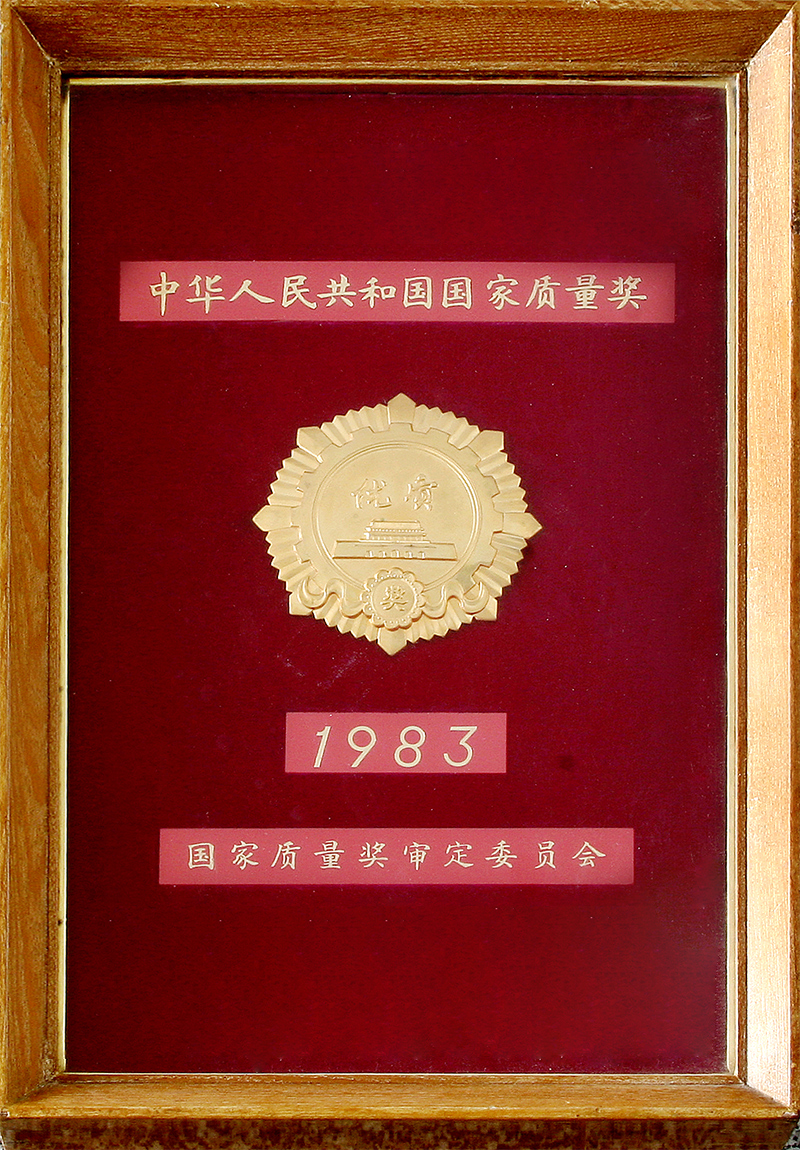
The factory's XP-70 and XP-70C porcelain insulators won the only Quality Gold Award in China's insulator industry.
1980
In 1980, a three-year vocational college (with a major in insulator manufacturing) was established. All students achieved college-level education and were assigned to various technical positions in batches, strengthening the technical team. In 1985, the factory officially established a technical school, shifting the focus of education to secondary and advanced technical training.
1976
Preparations began for the establishment of Dalian High Voltage Line Insulator Research Institute.
1974
Building on previous technological transformations, the factory launched its third technological transformation.
Aimed at expanding the international market and establishing high-strength porcelain production capacity in 1974, the transformation successfully broadened the international market presence and formed the corresponding production capacity for high-strength porcelain.
1973
In 1973, the First Ministry of Machinery Industry required domestic insulator factories to actively develop export-oriented products to meet China's insulator export needs. To catch up with international advanced levels, the factory began collecting data and translating international standards such as Australian Standards, American Standards, and British Standards. It successively formulated enterprise standards for various product series, which served as the basis for China's national standards including GB773, GB774, GB775... GB1000, and GB1001. In the same year, the company started mass production and export of products, which were sold to more than 30 countries and regions worldwide within five years, making it the earliest and largest domestic insulator exporter (accounting for 1/3 of the national total).
1970
The factory successfully developed an automatic forging press for spring clips (locking pins), capable of forging over 50 clips per minute. This increased efficiency by 48 times, enabling the completion of a month's production task in just one week while improving product quality. The successful development of this equipment contributed to enhancing the supporting capabilities of the entire industry.
1964
The company took the lead in adopting a symbol-based product model designation method. For example, in XP-95KN, "X" represents suspension type, "P" represents mechanical-electrical breakdown, and "95KN" represents the mechanical-electrical breakdown strength. This method was not only accepted by the industry but also adopted and continued in national standards. Later, to align with international practices and adopt IEC standards equivalently, this naming rule was no longer reflected after GB/T 7253-2005 replaced GB 7253-87 in 2005. Due to its long-term application in the early stage, it is still used in certain contexts today.
1963
In 1963, as the company's product series gradually improved, it formulated factory technical specifications for communication insulators, stack-type insulators, pin-type insulators, ordinary suspension insulators, and pollution-resistant suspension insulators. These specifications served as the basis for the First Ministry of Machinery Industry's electrical professional standards, such as Dian (D) 187, 188, 196, 331, and ODD.528.001-58.
1960
In early 1960, to adapt to the development trend of the electric power industry and meet the requirements of increasingly enhanced EHV lines, the factory strengthened its R&D capabilities by transforming its central laboratory into a research institute and initiating the development of high-strength porcelain. In 1961, the high-strength porcelain formula G-47# was successfully developed, laying the foundation for the production of high-strength porcelain.
1958
From 1957 to 1960, to expand production capacity, the factory launched a technological transformation with a total investment of 7.55 million yuan. It renovated the tunnel kiln, built a second tunnel kiln of the same specification (marking the first application of tunnel kilns for insulator firing in China), renovated multiple workshops, and purchased or self-manufactured 758 sets of various professional equipment.
1954
In 1954, to address the frequent major flashover problems on some power transmission lines in Northeast China, the company began developing pollution-resistant insulators, successfully creating 5 types of double-shed anti-pollution insulators. In 1957, it further developed three-shed products, making the company the earliest domestic manufacturer to develop and produce high-voltage pollution-resistant suspension insulators.
1953
The Electrical Industry Administration of the First Ministry of Machinery Industry (hereinafter referred to as the First Ministry of Machinery Industry) took over No. 11 Factory and renamed it "Dalian Insulator Factory" (hereinafter referred to as the Factory).
1952
The factory completed its first technological transformation and transformed into a professional insulator manufacturing factory.
1951
The factory was taken over by the Electrical Industry Bureau of the Industry Department of the Northeast People's Government and renamed "No. 11 Factory of Electrical Industry Administration". It operated independently and implemented the factory director responsibility system.
1950
The "San Jian (Three Arrows)" Brand was founded.
Born in 1950, the brand was officially used on the factory's first batch of π-4.5 high-voltage suspension insulators exported to the Soviet Union in the second half of that year.
In 1953, the "San Jian (Three Arrows)" Brand was formally registered with the Central Administration for Industry and Commerce.
1949
In 1949, to meet the needs of Sino-Soviet compensation trade and the emerging development of China's electric power industry, the factory invested over 1.5 million yuan to launch its first technological transformation. It successfully developed prototypes of high-voltage pin-type insulators such as ⅢC-6 and ⅢC-10, as well as π-4.5 high-voltage suspension insulators, which were then put into mass production. This ended China's inability to manufacture tension insulators, butterfly insulators, pin-type insulators, and suspension insulators for high-voltage transmission lines, and the factory began exporting to the Soviet Union.
1947
Dalian Ceramics Co., Ltd. and Dahua Ceramics Company were taken over by "Sino-Soviet Far East Electric Power Co., Ltd.", jointly managed by China and the Soviet Union, and merged into "Far East Electric Brick and Insulator Factory". The production of refractory brick products was resumed.
1920
Dahua Ceramics Company was established (the predecessor of No. 1 Division of Dalian Insulator Factory). Initially, it mainly produced daily-use ceramics, and later began manufacturing low-voltage communication insulators, pin-type insulators, and porcelain artillery shells.
1915
Dalian Ceramics Co., Ltd. (the predecessor of Dalian Insulator Factory) was formally established. At the initial stage of its establishment, its core business was manufacturing refractory materials.
1908
South Manchuria Railway Co., Ltd. (Japan) established a Central Research Institute in Dalian (the predecessor of the current Dalian Institute of Chemical Physics), conducting research on textiles, brewing, sanitation, ceramics, electrical engineering, chemistry, and other fields, laying the foundation for the establishment of Dalian Insulator Factory.



 Founding Yea
 Company Patents
 Export Experience
 Sales Volume (UHV Lines)